SenFib
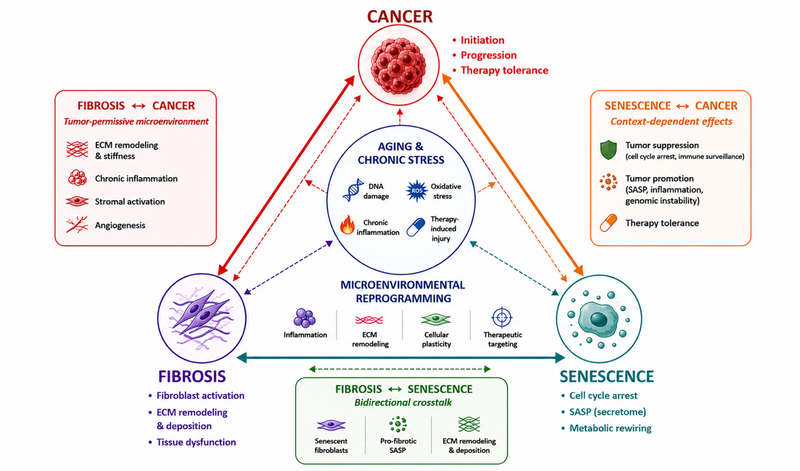
The « Senescence, Fibrosis and Cancer » team investigates how aging-associated cellular responses shape tissue homeostasis and influence cancer development. Our research focuses on cellular senescence and fibrosis, two major biological responses to aging and chronic stress, including DNA damage, oxidative stress, inflammation, and therapy-induced injury.
Although initially protective, senescence and fibrosis can contribute to profound alterations of the tissue microenvironment. Through the secretion of bioactive factors, extracellular matrix remodeling, metabolic changes, and stromal reprogramming, these processes influence tissue function and create conditions that can favor tumor initiation, progression, therapeutic tolerance, and disease recurrence.
Our primary goal is to understand the molecular and cellular mechanisms linking aging, senescence, fibrosis, and cancer. We seek to determine how these processes contribute to tumor development in physiological aging and in response to anticancer therapies, and to identify novel therapeutic opportunities to improve patient outcomes.
Building on complementary expertise in cellular senescence, fibrosis, DNA damage responses, non-coding RNAs, metabolism, endoplasmic reticulum stress, and intercellular communication, our research is organized around four major objectives:
- Understanding the role of senescence in age-related fibrotic diseases;
- Investigating the contribution of senescence to therapy-induced tumor initiation;
- Elucidating the mechanisms by which senescence and fibrosis promote therapeutic tolerance and cancer recurrence;
- Developing innovative strategies to target senescent and/or fibrotic cells in order to enhance the efficacy of anticancer and antifibrotic therapies.
By integrating fundamental and translational research, our team aims to uncover new mechanisms linking aging, fibrosis, and cancer, and to translate these discoveries into innovative therapeutic approaches.