PancResT
Team Chemoresistance and therapeutic targeting in pancreatic cancers - PancResT
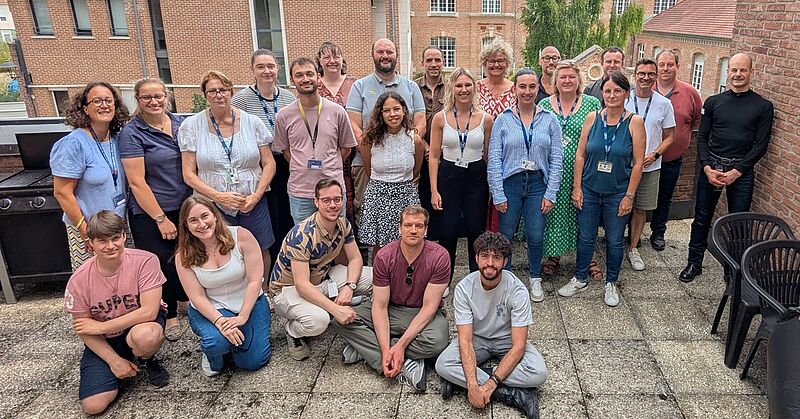
The PancResT team (located in Lille and Amiens) is headed by Dr Nicolas Jonckheere and Pr Mathieu Gautier.
The PancResT team aims at studying the mechanisms of chemoresistance in two pancreatic cancers: pancreatic ductal adenocarcinoma and pancreatic neuroendocrine tumors with the final goal to identify new biomarkers, molecular signatures, new targets and propose new therapeutic approaches. Our project is composed of 3 axis:
- Decipher the mechanisms of chemoresistance in PDAC and pNETs: Chemotherapy resistance in PDAC and role of MUC4 in tumor/stroma interaction (PI: N. Jonckheere, I. Van Seuningen); Pancreatic neuroendocrine tumors, metabolism and chemoresistance (PI: L Coppin, A. Jannin, N. Jonckheere)
- Characterize the tumor microenvironment of pancreatic cancer: Characterize the interaction between cancer and stromal cells. Involvement of ion signaling (PI M. Gautier), Impact of pollutants on normal, cancer and stromal cells (PI M. Gautier), Intratumoral microbiota (PI: J. Veziant) and Biophysical analysis of tumor heterogeneity (PI: V. Senez, I. Van Seuningen)
- Propose new therapeutic targets (MUC4/RTK/ion channels and new targets)
Pancreatic adenocarcinoma (PDAC) has an extremely poor prognosis (survival rate of 12 months) and is projected to become the second leading cause of cancer-related death by 2030 (Vincent et al. 2011; Rahib et al. 2014; Rahib et al. 2021). This dramatic outcome is related to a lack of efficient therapeutic tools, early diagnostic markers and a high resistance of PDAC cells to chemotherapy (gemcitabine or FOLFIRINOX regimen). PDAC is a very complex disease harboring intratumoral heterogeneity between tumor cells, PanIN lesions, highly fibrotic stroma (80% of the tumor mass containing soluble factors, extracellular matrix and cancer associated fibroblasts (CAFs)) and tumoral microbiome that can impact PDAC development and chemoresistance. A better understanding of chemoresistance mechanisms and identification of new molecular targets will undoubtedly allow the development of new therapeutic approaches to stop/slow down tumour progression.
Our team also investigates another type of pancreatic cancer: the pancreatic neuroendocrine tumors (pNETs) that are rare tumors, accounting for only 3-5% of all cases of pancreatic neoplasms originating from pancreatic hormone-producing cells (islet cells) but with an increased incidence. pNETS are characterized by high occurrence of metastasis with of a high level of primary chemoresistance (Scarpa et al. 2017). pNETs are particularly difficult to treat because of their heterogeneity.
We already identified two families of membrane proteins (mucins and ion channels) as potential biomarkers and targets in PDAC:
The oncomucin MUC4 was discovered in the laboratory (Porchet et al. 1991) and is one of the most differentially expressed genes in PDAC that are thought to be potential clinical targets (Iacobuzio-Donahue et al. 2003). For the past two decades, we are internationally recognized for its work on MUC4, has extensively characterized MUC4 expression, transcriptional and epigenetic regulation and biological roles in pancreatic cancers and showed that MUC4 acts as an oncogenic factor in PDAC (Jonckheere et al. 2012) and mediates chemoresistance to gemcitabine and FOLFIRINOX protocols (Skrypek et al. 2013).
On the other hand, ion channels are involved in many physiological and pathological processes including carcinogenesis. We are internationally recognized for its work on the role of ion signaling in pancreatic cancer cell (PCC) fates. In particular, we showed the overexpression of TRPM7 channels in PDAC (Rybarczyk et al. 2012) and we characterized its role in PCC migration (Rybarczyk et al. 2012; Lefebvre et al. 2020), invasion (Rybarczyk et al. 2017) and also in PCC transformation and pancreatic stellate cell (PSC) activation (Vanlaeys et al. 2020; Auwercx et al. 2022). Interestingly, we recently identified a functional and possibly physical link between MUC4 and TRPM7 in PCC (unpublished data).