Research Themes
Directed by Pr. Philippe MARCHETTI & Dr. Nicolas GERMAIN
Our research aims to develop physiologically relevant three-dimensional (3D) models of myeloid sarcoma (MS) using advanced bioprinting technologies to better understand the mechanisms driving tumor persistence, progression, and resistance to treatment.
Using extrusion-based and inkjet bioprinting approaches, we engineer biomimetic tissue constructs composed of leukemic cells embedded within hydrogel-based extracellular matrices. These models allow the recreation of key features of the tumor microenvironment that are difficult to reproduce in conventional two-dimensional cultures, including cell-cell interactions, three-dimensional architecture, nutrient and oxygen gradients, and long-term cellular adaptation.
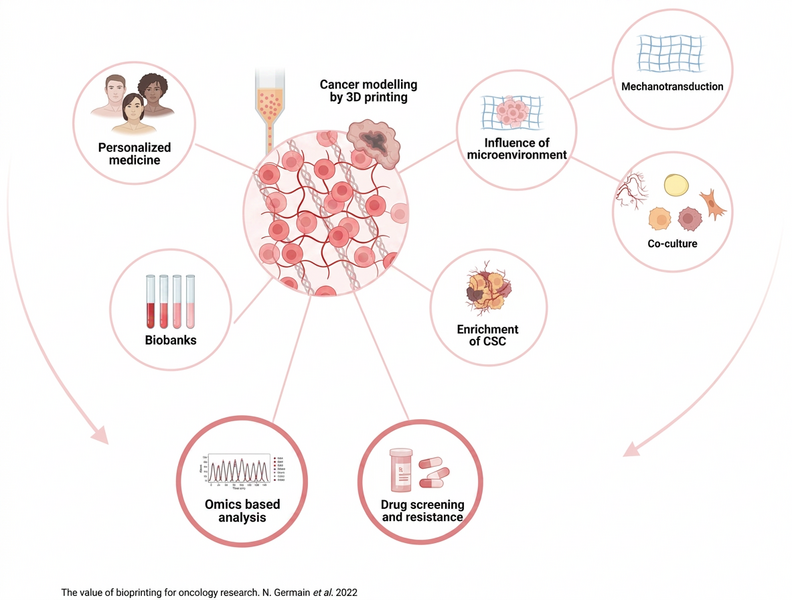
A major focus of our work is the investigation of the reciprocal interactions between myeloid sarcoma cells and adipocytes. Increasing evidence suggests that adipose tissue actively contributes to leukemia progression by providing metabolic support and promoting treatment resistance. Through dedicated co-culture and bioprinted models, we study how adipocytes influence leukemic cell survival, proliferation, migration, and metabolic reprogramming. Particular attention is given to lipid metabolism, mitochondrial function, oxidative phosphorylation, and the mechanisms involved in therapeutic escape.
We also use these 3D models to evaluate the response of leukemic cells to conventional chemotherapy and emerging targeted therapies. By integrating functional assays, advanced imaging, histological analyses, and molecular characterization, we aim to identify microenvironment-driven mechanisms of drug resistance and to uncover novel therapeutic vulnerabilities.
Ultimately, this work seeks to establish robust and translational human models of myeloid sarcoma that can serve as innovative platforms for studying tumor biology, testing new therapeutic strategies, and supporting the development of personalized medicine approaches in hematological malignancies.
Directed by Dr. Yasmine TOUIL
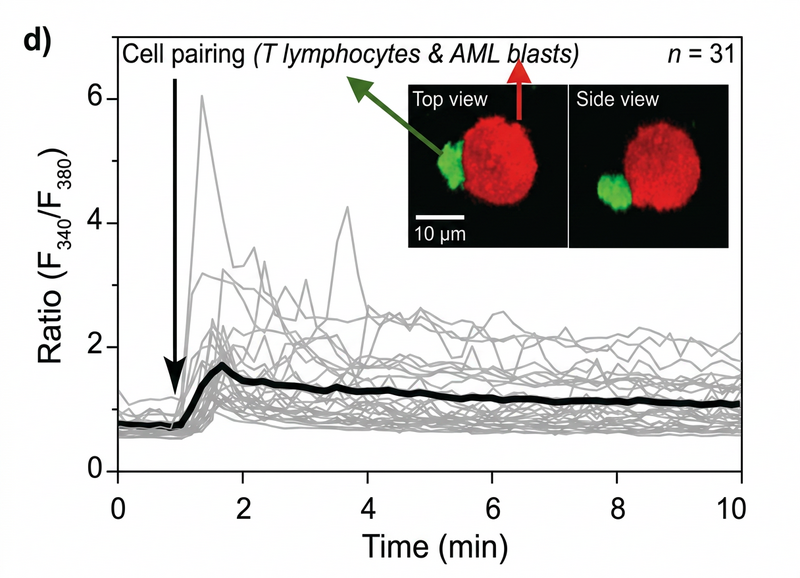
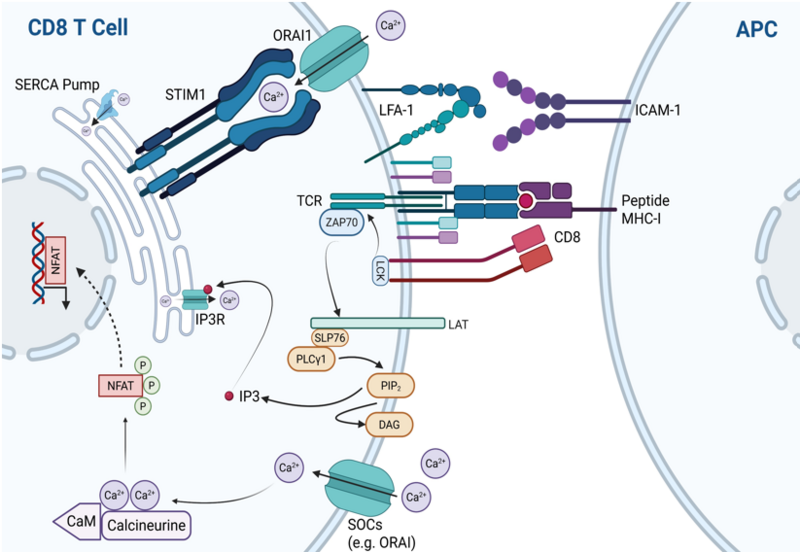
Our project investigates dysregulation of the immune synapse in hematological malignancies at the single-cell level. We aim to decipher how malignant cells alter immune cell activation, signaling, and cytotoxic responses, with a particular focus on calcium-dependent mechanisms, immune evasion, and resistance-associated phenotypes.
To address these questions, we combine immuno-oncology expertise, microfluidic single-cell pairing platforms, and AI-based image analysis and statistical modeling through collaborations with IEMN, Paul Painlevé, and the IoniC team. We focus on calcium signaling dynamics, which are central to immune synapse function, and explore their potential link to prognosis and therapy-response prediction.
This work is supported by the PLBio-INCa funding scheme, enabling an interdisciplinary approach that integrates engineering, computational analysis, and immunobiology to understand immune dysfunction in hematological cancers. In parallel, a maturation project is currently being developed with SATT Nord under the IMUNOMEMS program, together with an incubation project with Eurasanté. Dr Yasmine Touil is a Co-PI on the maturation project.
PERSTIM members : Dr Yasmine Touil (PI), Dr Sofia Titah, Aurélie Guillemette, Eva Gez
Immune synapse (IS)
Single-cell pairing devices, T cell calcium response, IS structure and signaling Dysregulation mechanisms in hematological malignancies

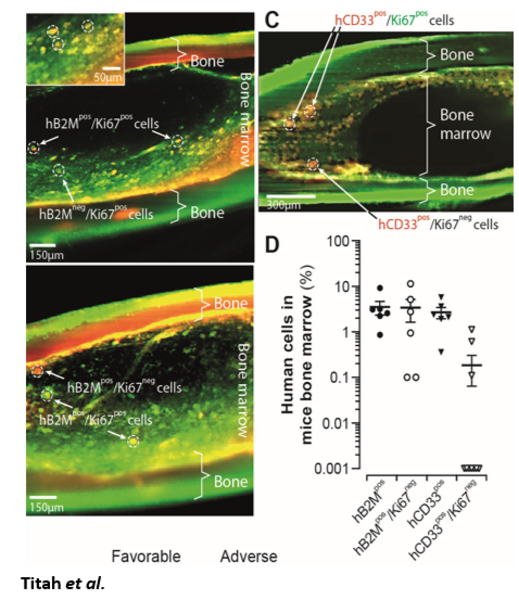
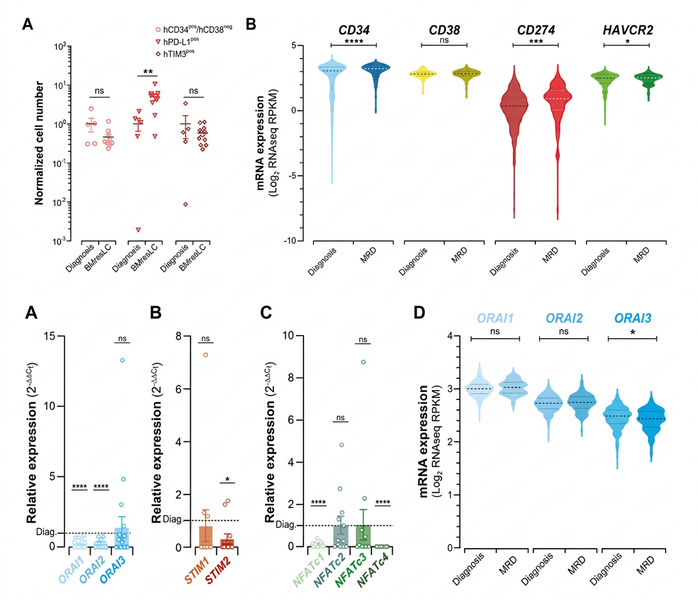
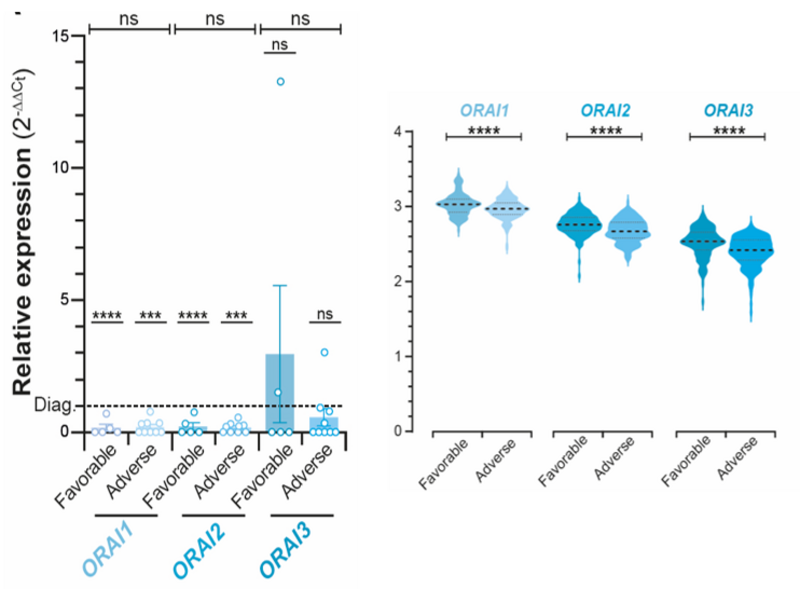
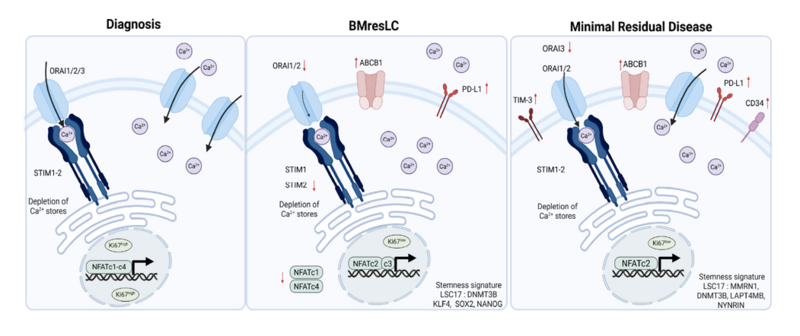
Stem cell and calcium signature of residual cancer cells
Link with immune evasion, prognosis, chemotherapy resistance?
1. Shaik F, Ahmadian B, Guillemette A, Titah S, Cao H, Quesnel B, Collard D, Lemonnier L, Touil Y†, Tarhan MC†. Selective access to individual cells after assembling for advanced cell-cell interaction studies. J Nanobiotechnology. 2026 Apr 29. doi: 10.1186/s12951-026-04337-x. Epub ahead of print. PMID: 42057006.† Co-last-authors.
2. Titah S, Guillemette A, Lewuillon C, Shaik FA, Berthon C, Goursaud L, Tardivel M, Bongiovanni A, Chauvet P, Jouy N, Peyrouze P, Cheok M, Brinster C, Manier S, Tarhan MÇ, Lemonnier L, Quesnel B, Touil Y. Pre-therapeutic bone marrow-resident leukemic cells in acute myeloid leukemia exhibit a distinct dysregulated calcium signature and stem-like profile reflecting minimal residual disease precursors. J Exp Clin Cancer Res. 2026 Jan 9;45(1):55. doi: 10.1186/s13046-025-03634-x. PMID: 41508052; PMCID: PMC12911078.
3. Guillemette A, Gez E, Titah S, Touil Y. A Hidden Checkpoint: Bidirectional pH Remodeling of the Immunological Synapse in Cancer, Methods, and Therapeutic Opportunities. J Immunol Res. 2026;2026(1):e5768926. doi: 10.1155/jimr/5768926. PMID: 42054667; PMCID: PMC13128168.
4. Sofia Titah, Faruk A. Shaik, Bahram Ahmadian, Aurélie Guillemette, Eva Gez, Bahram Ahmadian, Loïc Lemonnier†, Mehmet C. Tarhan† and Yasmine Touil,†. Immunological Synapses: From Molecular Mechanisms to Clinical Applications. In minor revision in STTT journal.
5. Sofia Titah, Clara Lewuillon, Faruk Azam Shaik, Aurelie Guillemette, Eva Gez, Nathalie Jouy, Laure Goursaud, Celine Berthon, Salomon Manier, Carine Brinster, William Langue, Tzung Hsuen Khoo, Alexandre Poulain, Sophie Dabo, Dominique Collard, Bruno Quesnel, Loic Lemonnier, Mehmet Cagatay Tarhan, Yasmine Touil
. Deciphering the dysfunctional immunological synapse in acute myeloid leukemia through microfluidic [abstract]. In: Proceedings of the American Association for Cancer Research Annual Meeting 2026; Part 1 (Regular Abstracts); 2026 Apr 17-22; San Diego, CA. Philadelphia (PA): AACR; Cancer Res 2026;86(7 Suppl):Abstract nr 4260. doi.org/10.1158/1538-7445.AM2026-4260
6. Eva Gez, Sofia Titah, Aurélie Guillemette, Céline Berthon, Laure Goursaud, Nathalie Jouy, Loic Lemonnier, Salomon Manier, Carine Brinster, Suman Mitra, Bruno Quesnel, Yasmine Touil
. Extracellular acidosis modulates calcium signaling and adaptive resistance mechanisms in acute myeloid leukemia [abstract]. In: Proceedings of the American Association for Cancer Research Annual Meeting 2026; Part 1 (Regular Abstracts); 2026 Apr 17-22; San Diego, CA. Philadelphia (PA): AACR; Cancer Res 2026;86(7 Suppl):Abstract nr 7298. doi.org/10.1158/1538-7445.AM2026-7298
7. Aurélie Guillemette, Eva Gez, Sofia Titah, Céline Berthon, Laure Goursaud, Nathalie Jouy, Loic Lemonnier, Salomon Manier, Carine Brinster, Suman Mitra, Bruno Quesnel, Yasmine TOUIL
. Effect of chronic exposure to acidic pH on the MOLM-13 acute myeloid leukemia cell line [abstract]. In: Proceedings of the American Association for Cancer Research Annual Meeting 2026; Part 1 (Regular Abstracts); 2026 Apr 17-22; San Diego, CA. Philadelphia (PA): AACR; Cancer Res 2026;86(7 Suppl):Abstract nr 7301. doi.org/10.1158/1538-7445.AM2026-7301
8. Laguillaumie MO, Titah S, Guillemette A, Neve B, Leprêtre F, Ségard P, Shaik FA, Collard D, Gerbedoen JC, Fléchon L, Hasan Bou Issa L, Vincent A, Figeac M, Sebda S, Villenet C, Kluza J, Laine W, Fournier I, Gimeno JP, Wisztorski M, Manier S, Tarhan MC, Quesnel B, Idziorek T, Touil Y. Deciphering genetic and nongenetic factors underlying tumour dormancy: insights from multiomics analysis of two syngeneic MRD models of melanoma and leukemia. Biol Res. 2024 Sep 3;57(1):59. doi: 10.1186/s40659-024-00540-y. PMID: 39223638; PMCID: PMC11370043.
9. Laguillaumie MO, Lewuillon C, Touil Y*, Lemonnier L*, Idziorek T*. LAM fatale ? - La signalisation calcique à la rescousse ! [Lethal AML? Calcium signalling to the rescue!]. Med Sci (Paris). 2023 Jun-Jul;39(6-7):515-521. French. doi: 10.1051/medsci/2023083. Epub 2023 Jun 30. PMID: 37387659.* shared the last co-authorship.
10. Lewuillon C, Guillemette A, Titah S, Shaik FA, Jouy N, Labiad O, Farfariello V, Laguillaumie MO, Idziorek T, Barthélémy A, Peyrouze P, Berthon C, Tarhan MC, Cheok M, Quesnel B, Lemonnier L, Touil Y. Involvement of ORAI1/SOCE in Human AML Cell Lines and Primary Cells According to ABCB1 Activity, LSC Compartment and Potential Resistance to Ara-C Exposure. Int J Mol Sci. 2022 May 16;23(10):5555. doi: 10.3390/ijms23105555. PMID: 35628366; PMCID: PMC9141756.
11. Farfariello V, Gordienko DV, Mesilmany L, Touil Y, Germain E, Fliniaux I, Desruelles E, Gkika D, Roudbaraki M, Shapovalov G, Noyer L, Lebas M, Allart L, Zienthal-Gelus N, Iamshanova O, Bonardi F, Figeac M, Laine W, Kluza J, Marchetti P, Quesnel B, Metzger D, Bernard D, Parys JB, Lemonnier L, Prevarskaya N. TRPC3 shapes the ER-mitochondria Ca2+ transfer characterizing tumour-promoting senescence. Nat Commun. 2022 Feb 17;13(1):956. doi: 10.1038/s41467-022-28597-x. PMID: 35177596; PMCID: PMC8854551.
12. Lewuillon C, Laguillaumie MO, Quesnel B, Idziorek T, Touil Y*, Lemonnier L. Put in a "Ca2+ll" to Acute Myeloid Leukemia. Cells. 2022 Feb 4;11(3):543. doi: 10.3390/cells11030543. PMID: 35159351; PMCID: PMC8834247.* shared the co-last authorship
13. Shaik FA, Lewuillon C, Guillemette A, Ahmadian B, Brinster C, Quesnel B, Collard D, Touil Y*, Lemonnier L*, Tarhan MC*. Pairing cells of different sizes in a microfluidic device for immunological synapse monitoring. Lab Chip. 2022 Mar 1;22(5):908-920. doi: 10.1039/d1lc01156a. PMID: 35098952. * shared the last co-authorship.14. Patent:WO2024170701: Microfluidic Device And Method For Forming A Cell Assembly, And Method For Selectively Treating A Cell Within Such A Cell Assembly. Touil Y., Tarhan M.C, Shaik F.S, Brinster C., Lemonnier L., Quesnel B., Collard. D. 2024-08-22
15. Patent: WO2023209053: Device And Method For Trapping Cell Pairs, And Method For Analysing Cell Pairs In Real Time, Touil Y., Tarhan M.C, Shaik F.S, Brinster C., Lemonnier L., Quesnel B., Collard. D. 2023-11-02
Directed by Prof. Salomon Manier at Lille University Hospital
Introduction
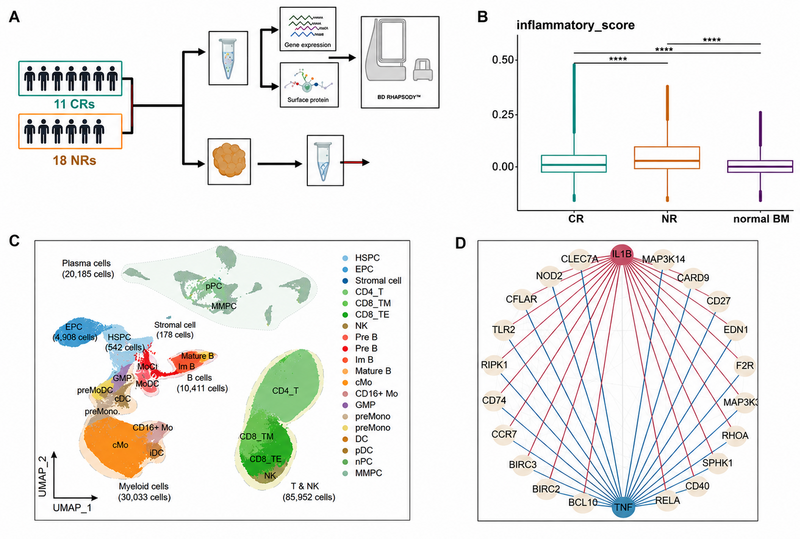
Multiple myeloma (MM) remains an incurable plasma cell malignancy despite major therapeutic advances, including monoclonal antibodies, bispecific antibodies, and CAR-T cell therapies. While these innovative treatments have significantly improved patient outcomes, most patients eventually relapse due to mechanisms of tumor adaptation, immune escape, and clonal evolution.
The Multiple Myeloma Research Program at Lille University Hospital, led by Prof. Salomon Manier, integrates clinical trials, translational research, and advanced multi-omics technologies to better understand treatment resistance and develop more effective immunotherapeutic strategies. Our work is conducted in close collaboration with the Intergroupe Francophone du Myélome (IFM), academic partners, and industry-sponsored clinical trials.
Research Objectives
A major focus of our research is to investigate how myeloma cells adapt under therapeutic pressure. Using single-cell technologies, we have identified rare stem-like myeloma cell populations that may contribute to disease persistence and resistance to immunotherapy. We aim to characterize these cells, determine their clinical significance, and understand how they evade immune surveillance.
We investigate how the genomic landscape of myeloma influences response to novel immunotherapies. By integrating whole-exome sequencing, transcriptomics, and neoantigen prediction, we seek to identify biomarkers associated with response or resistance to bispecific antibodies and other immune-based treatments.
To better understand disease progression and relapse, we develop liquid biopsy approaches based on circulating tumor DNA (cfDNA). Our objective is to non-invasively track clonal evolution, identify emerging resistant subclones, and evaluate minimal residual disease (MRD) throughout the disease course.
The bone marrow microenvironment plays a critical role in myeloma persistence and immune escape. Our research focuses on the interactions between malignant plasma cells and immune cells, particularly T lymphocytes. We aim to identify the mechanisms underlying T-cell dysfunction, tumor dormancy, and resistance to immunotherapies in order to develop strategies that restore effective anti-tumor immunity.
Methods and Technologies
Our research combines clinical and translational studies using patient samples collected through prospective clinical trials and dedicated biobanking programs.
Key technologies include:
- Single-cell multi-omics (single-cell RNA sequencing, immune repertoire sequencing, and chromatin profiling)
- Whole-exome, targeted, and whole-genome sequencing
- Circulating tumor DNA (cfDNA) analysis and liquid biopsy monitoring
- Spatial and functional characterization of the tumor microenvironment
- High-dimensional immune profiling and proteomics
- Microfluidic platforms to study tumor–immune synapse dynamics at the single-cell level
- Artificial intelligence and machine learning approaches for patient stratification and predictive biomarker discovery
- In vivo models of minimal residual disease and treatment resistance
By integrating genomic, immunologic, and clinical data, our goal is to identify the biological mechanisms driving resistance and relapse, improve patient stratification, and contribute to the development of next-generation immunotherapies for multiple myeloma.
Directed by Dr. Fabrice SONCIN, DR Inserm
Team Vaisseaux
Context and Objectives:
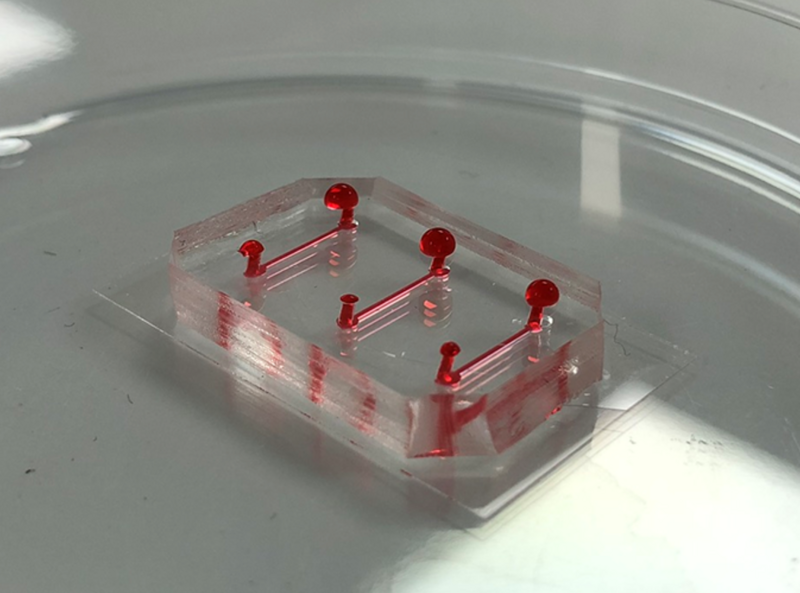
We design original blood vessels-on-chip devices to study the molecular mechanisms which regulate the vascular barrier functions, its immune activation, and how they participate in vessel integrity, angiogenesis, and in the extravasation of blood-borne immune cells. We also study the effects of anti-cancer therapies used in patients, such as antiangiogenics, immuno-, and radiation therapies on the vascular barrier.

Methods:
Devices are designed using CAD and soft lithography or SLA 3D printing to create PDMS/glass microchannels. These are seeded with primary human endothelial and perivascular cells and perfused using microfluidic systems. Biological validations are performed using cell and molecular biology approaches, such as immunofluorescence and confocal microscopy, Taqman RT-qPCR, and permeability and immune activation functional assays.
Perspectives:
Assess the role of biological signals & environment components on blood vessel functions, screen active drugs and anti-cancer treatments for their effects on blood vessel permeability, activation, and angiogenesis.
Recent publications :
- Lansche C et al. Adv. Healthcare Mater. 2025:e2403446
- Terrassoux L et al Small. 2025 21(45):e05343
- Sandoval Pacheco C et al. Mol Ther. 2025 33(12):6212-6225
- Sivéry A. et al. Biomicrofluidics 2025, 19, 054103
Princeps publication :
- Delannoy et al. Biomedicines 2022, 10(4), 797
Support: