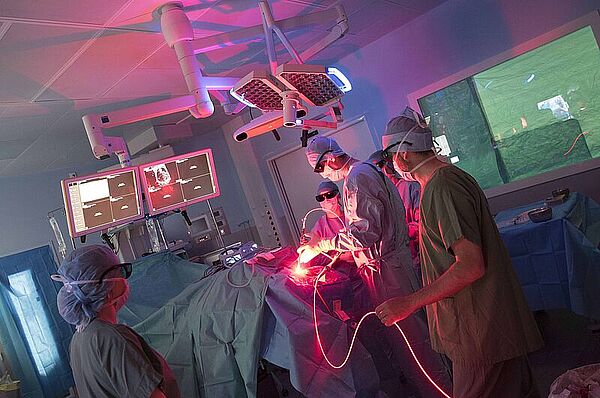
Clinical Trials
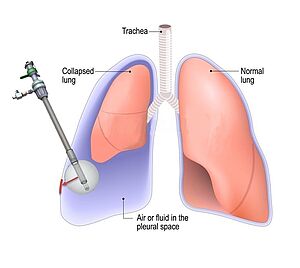
The IMmunotherapy Pleural 5-ALA PDT “IMPALA” trial project: Pilot study of the feasibility of an innovative multimodal treatment combining intrapleural photodynamic therapy controlled by videothoracoscopy followed by adjuvant immunotherapy with anti-PD-1 Nivolumab antibody in patients with malignant pleural mesothelioma
Ongoing / closed: Ongoing
CPP sud-Est II approval : 18 may 2020
ANSM approval : 15 may 2020
Research type (retro/prospective): Academic, pilot, feasibility, phase 2, one-arm, monocentric study
Summary: Malignant pleural mesothelioma is a rare, aggressive cancer that develops in the pleura, a thin layer of tissue surrounding the lungs. Malignant pleural mesothelioma (MPM) is associated with a poor prognosis, with a median survival from 13 to 19 months for patients not eligible for a radical surgery. Pleural biopsies by thoracoscopy (VATS) are the gold standard to obtain a firm histological diagnosis of MPM, and may also help for tumor staging and palliative treatment (i.e. talc pleurodesis and/or insertion of indwelled pleural catheter, IPC).
Immunotherapy such as anti-PD-1 antibodies appears these last years as a major therapeutic tool for many cancers including recently, fMPM (Lancet Oncol 2018, IFCT MAPS-2 trial, NivoMes trial…). Photodynamic therapy (PDT), a widely used therapeutic modality, is also a promising anti-tumor because the reaction of a drug photosensitizer administrated to patient (IV, oral or local administration), in combination with oxygen, when exposed to light (at specific wavelength) may locally induce toxic radicals, killing specifically malignant cells. Moreover, the immunogenic cell death induced by PDT could later favor anti-tumor immune response.
Our research lab ONCOTHAI is highly experienced in lasers and PDT for many years, managing several PDT-based clinical trials with the University Hospital (CHU) of Lille in prostate cancer, glioma, skin cancers and diseases, malignant pleural mesothelioma (MesoPDT, based on previous promising US results from Friedberg J et al)
Photosensitizers such as 5-Aminolevulinic Acid (5-ALA; Gliolan®) were also already used in pleural malignancies for diagnostic purpose during VATS because of its specific uptake by tumor cells that may help to better visualize these cells (becoming fluorescent with specific light exposure).
àThese advantages of both immunotherapy and PDT led us to propose a combination of the two treatments to improve local anti-tumor effect in pleural malignancies but also to enhance distant action of anti-PD-1 drug (Nivolumab) in the case of MPM. Based on a rationale of a synergistic effect of PDT and checkpoint inhibitors we hope to induce a strong anti-tumor immune response without cumulative toxicity, leading to a better outcome for these patients compared to anti-PD-1 treatment alone.
Principal Investigator: Pr Arnaud SCHERPEREEL
Scientific coordinator: Pr Serge MORDON U1189 Inserm
Study Sponsor: CHU of Lille
Primary endpoints: feasibility of the full strategy without unexpected side effects compared to Nivolumab alone (none are expected, induced by 5-ALA)
Secondary endpoints:
Secondary endpoints will include quality of life (scales), chest pain assessment (EVA scale), cost evaluation, but also objective response rate, progression free survival, overall survival data to be compared with previous Nivolumab trials and historical series (ASCO, ESMO, WCLC 2017…). Ancillary studies (PD-L1, TMB, immune cells populations…) will assess at baseline (pleural biopsies…) and during treatment with a study of kinetics of the anti-tumor immune response on blood and pleural effusion samples (collected through IPC) +/- optional new pleural biopsies with patients specific consent.
Evaluation criteria of the primary endpoint: The main criterion will be the proportion of patients having the full multimodal treatment (target: 66% minimum of total patients, i.e. 14 out of 20 patients) without inacceptable and unexpected toxicity (grade≥3) according National Cancer Institute (NCI) criteria, reviewed by an Independent Survey Commity.
Evaluation criteria of the secondary endpoints:
- Objective response rate (ORR)
- median overall survival (mOS)
- median progression free survival (mPFS)
- assessment of quality of life (QoL) of patients by dedicated EORTC QLQ C30 (or LCSS-30) questionnaire before and after treatment
- evaluation of chest pain evaluation using visual scale.
Estimated enrollment: 25 MPM patients.
Clinicaltrials.gov identifier: NCT04400539
Contact and location:
Professeur Arnaud SCHERPEREEL
Adresse : Pneumologie et Oncologie Thoracique, Hôpital Calmette, CHRU de Lille
Phone : +33 (0)3 20 44 49 98
Mail : arnaud.scherpereel chru-lille fr
Bristol-Myers Squibb International Corporation
Team ONCOTHAI, CRCLille Inserm U1366, bâtiment Onco Lille, Bd du Pr Jules Leclercq, 59000 Lille
Phone: +33 (0)3 20 44 67 09
Study evaluating the non-inferiority and better tolerability of the device PHOS-ISTOS® compared to the conventional photodynamic therapy (PDT) during the treatment in Actinic Keratosis (AK)
Ongoing / closed: Closed
Research type (rétro/prospective): prospective
Synopsis:
Actinic keratosis (AK) is a common chronic skin disease that can potentially progress to invasive squamous cell carcinoma (SCC). AK negatively affects the quality of life of patients with pain, itching or bleeding. On photodamaged skin, AKs are associated with subclinical lesions (cytological alterations) and sometimes with skin cancer, which has led to the concept of a cancer field.
Photodynamic therapy (PDT) is one of the treatments that has shown its effectiveness on clinical and subclinical dermatological lesions. In the literature, response rates between 70% and 90% are reported at 3 months after PDT treatment.
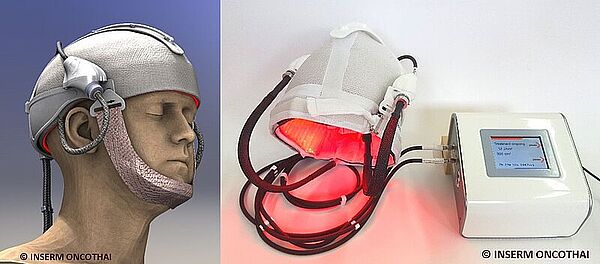
To improve PDT, a new light emitting device called PHOS-ISTOS®, composed of optical fibers, has been developed. This flexible device can provide a homogeneous light of low intensity, to provide a controlled and less painful treatment. The aim of the study is to evaluate the non-inferiority and the tolerance of the new PHOS-ISTOS® device, to treat actinic keratosis of the scalp and the forehead (PHOS-ISTOS®-PDT) compared to the MAL -PDT Conventional (C-PDT).
This is a prospective, comparative (intra-individual, split-face), randomized, open and bi-centric study of the non-inferiority of PHOS-ISTOS® PDT compared to C-PDT using the Aktilite® panel CL128 as a control device.
The AK will be diagnosed clinically, symmetrically distributed on the scalp and / or the forehead and will receive:
- In zone A: C-PDT treatment with an Aktilite® device
- On zone B: PDT treatment with the PHOS-ISTOS® device
Major patients with a clinical diagnosis of at least 10 untreated, unpigmented and non-hyperkeratotic AK lesions in the forehead and / or scalp will be included.
Patients will present themselves to one of two investigation centers for a treatment session (day 1) and will be followed at 7 days, 3 months and 6 months. A second treatment session may be performed at 3 months in cases where an incomplete response is observed.
Principal Investigator: Prof Laurent MORTIER
Co-investigator: Prof Rolf Markus Szeimies (KVEST)
Scientific coordinators: Prof Serge MORDON
Study Sponsor: Lille University Hospital
Primary endpoints: Show the non-inferiority in terms of the efficacy of PDT PHOS-ISTOS® compared to C-PDT at M3.
Secondary endpoints:
- evaluate treatment tolerance, including pain and local tolerance on D1 and D7
- evaluate the complete response rate to M3 and M6 for each treated lesion
- evaluate the cosmetic results at M3 and M6 (cosmetic aspect of the treated area)
- estimate the number of patients with 75% lesion reduction at M3 and M6
- evaluate quality of life and patient satisfaction (D7, M3, M6).
Evaluation criteria of the primary endpoint: To show the non-inferiority in terms of efficacy of the PHOS-ISTOS® PDT compared to the C-PDT at M3.
Evaluation criteria of the secondary endpoints:
- to evaluate the treatment tolerability including pain and local tolerance at D1 and D7
- to evaluate the complete response rate at M3 and M6 for each treated lesion
- to evaluate the cosmetic results at M3 and M6 (cosmetic aspect of the treated zone)
- to estimate the number of patients having a 75% lesion reduction at M3 and M6
- to evaluate the patient’s quality of life and satisfaction (D7, M3, M6).
Estimated enrollment: 42 to 47 patients
Clinicaltrials.gov identifier: NCT03076892
Contact and location:
LILLE : Pr Laurent MORTIER N° RPPS 10002307246
Service de dermatologie, hôpital Claude Huriez Rue Michel Polonowski, 59000 Lille
Tel: +33 (0)3 20 44 48 68
RECKLINGHAUSEN: Prof. Dr. med. Rolf-Markus SZEIMIES
KLINIKUM VEST GMBH
Knappschaftskrankenhaus Recklinghausen
Dorstener Str. 151, 45657 Recklinghausen Germany
Tel: +49 2361 56 3201

Intrapleural Photodynamic Therapy in a Multimodal Treatment for Patients With Malignant Pleural Mesothelioma
Ongoing / closed: closed
Research type (rétro/prospective): prospective
Synopsis:
Malignant pleural mesothelioma (MPM) is an aggressive tumour with poor prognosis (median survival <13 months), and high resistance to chemotherapy. Extended pleurectomy/decortication (eP/D) is a debulking surgery of MPM but cannot be considered as a curative treatment. Therefore it has been suggested that eP/D may be of interest if combined with intra-operative treatment and adjuvant therapies.
Photodynamic Therapy (PDT) is an innovative treatment based on the rationale that tumour cells, if previously treated with photosensitizing drugs (Photofrin), will die when exposed to light at a particular wavelength. Interestingly PDT might also stimulate anti-tumour immune response through the release of tumour antigens and induced inflammation.
PDT was tested in phase I-II trials for MPM in combination with EPP or eP/D, and chemotherapy. US studies from J Friedberg et al found very promising survival results in MPM when combining eP/D, but not EPP, intra-operative PDT and chemotherapy (cisplatin-pemetrexed), with a median overall survival of 31.7 months.
However, the definitive value of intra-pleural PDT combined to eP/D in the treatment of MPM still need to be validated. The same multimodal treatment has been established in Lille, the French national expert centre for MPM, with the help of our american colleagues. Therefore, this phase II trial proposes to patients to benefit from the combination of eP/D, intra-operative PDT then chemotherapy by cisplatin-pemetrexed and prophylactic radiotherapy.
Primary endpoint is the feasibility for the patients to have the full multimodal treatment of MPM including intrapleural PDT without unacceptable or unexpected grade III-IV toxicities. Secondary endpoints are PFS, OS, ORR, and quality of life. If the feasibility of such treatment would be confirmed in France, a multicentric, randomized trial comparing this experimental treatment vs control arm (same multimodal treatment without PDT) is planned.
Principal investigator: Pr. Arnaud SCHERPEREEL
Scientific coordinators: Pr. Serge MORDON
Study Sponsor: University Hospital of Lille - France
Primary endpoints: Number of Patients having the full multimodal treatment without unacceptable and unexpected toxicities (grade ≥ 3) graded According to NCI CTC Version 4.0 [ Time Frame: at 12 months ]
Secondary endpoints:
- Number of responders or stable patients after surgery [ Time Frame: at 12 months ]
- Progression-free survival (PFS) [ Time Frame: through study completion, an average of 13 months ]
- Quality of life assessed by a specific questionnaire MPM (HCCA EORTC-30) [ Time Frame: Baseline and at 12 months ]
Evaluation criteria of the primary endpoint:
Proportion of patients receiving complete multimodal treatment, including intrapleural PDT (expected target: 66% minimum, i.e. 4/6 patients), according to the following criteria:
- Realization of the complete multimodal treatment: pre-operative 24h or 48h injection of the photosensitizer (Photofrin), eP/D type resection surgery, intrapleural PDT, prophylactic radiotherapy (21 Gy) of the drain holes and surgical scars, adjuvant chemotherapy by 4 to 6 platinum and pemetrexed cycles.
- Realization of this complete therapeutic protocol within the given time: at most within 9 months after surgery by eP/D (+ intrapleural PDT): prophylactic radiotherapy within 2 months postoperative and adjuvant chemotherapy (cycles of 21 days minimum ( maximum every 5 weeks) x 4 to 6 cycles) to begin within 3 months postoperatively.
- Evaluation of the safety profile: unacceptable and unexpected toxicities (grade ≥ 3) according to the National Cancer Institute (NCI) toxicity criteria (reviewed by an Independent Surveillance Committee).
Evaluation criteria of the secondary endpoints:
- Number of patients (responders or stable according to modified RECIST criteria) at 12 months postoperatively
- Progression-free survival (PFS) from date of inclusion to date of relapse
- Quality of life assessed by a specific MPM questionnaire (EORTC LCSS-30) pre- and post-therapeutic
- Response to treatment with tumor biomarkers and CT-coupled positron emission tomography (PET-CT)
Estimated enrollment: 6 patients
Clinicaltrials.gov identifier: NCT02662504
Contact and location:
Pr. Arnaud SCHERPEREEL
Pneumologie et Oncologie Thoracique, Hôpital Calmette, CHRU de Lille
Phone: +33 (0)3 20 44 49 98

A phase II study evaluating the non-inferiority of the device FLEXITHERALIGHT compared to the conventional photodynamic therapy (PDT)
Ongoing / closed: closed
Research type (rétro/prospective): prospective
Synopsis:
Actinic keratosis (AK) is characterized by pre-invasive, cancerous lesions on sun-exposed skin that negatively affect patient quality of life and may progress to invasive squamous cell carcinoma (SCC). If untreated, AK may either regress or progress to SCC, with significant morbidity. The most commonly used treatments for AK are cryotherapy, topical chemotherapy and, more recently, photodynamic therapy (PDT). This clinical study is part of a project that aims to create specific light-emitting fabrics (LEFs) that strongly improve the efficiency and reliability of PDT as a treatment for AK.
This study aims to compare the efficacy and tolerability of a new PDT protocol involving the Flexitheralight device (N-PDT) with the classic protocol involving the Aktilite CL 128 device (Galderma) (C-PDT) for the treatment of AK. All participants receive both protocols.
The primary objective of this study is to compare the lesion response rate after 3 months of N-PDT with C-PDT.
Secondary objectives are evaluations of pain and local tolerance during treatment, the clinical evolution of the subject's skin, and evaluations of patient quality of life and satisfaction.
The study is a split-face, intra-individual comparison of two PDT protocols. The total number of patients recruited is 42. Patients are exposed to a continuous red light with the Aktilite CL 128 device on one side of the face and to fractionated red illumination with the new device, Flexitheralight, on the other side of the face.
Males or females over the age of 18 years with a clinical diagnosis of at least 10 previously untreated, non-pigmented, non-hyperkeratotic, grade I and II AK lesions of the forehead and/or scalp (according to Olsen et al. JAAD 1991) are included and are recruited from the University of Lille Hospital. The patients come to the investigational centre for one treatment session (day 1), and they are followed up after 7 days, 3 months and 6 months. A second treatment session can be performed on day 111 in cases in which an incomplete response is observed at the 3 month follow-up.
Principal Investigator: Pr. Laurent MORTIER
Scientific coordinators: Pr. Serge MORDON
Study Sponsor: CHRU de Lille
Primary endpoint: Comparison of the lesion response rate 3 months after N-PDT (FLEXITHERALIGHT) with C-PDT (Aktilite CL128®).
Secondary endpoints:
- Treatment tolerability,
- Complete response rate after 6 months
- Cosmetic results,
- Patient quality of life and satisfaction.
Evaluation criteria of the primary endpoint: Total disappearance of each lesion, Number of patients presenting a 75% lesion reduction rate
Evaluation criteria of the secondary endpoints:
- Evaluation of pain (Visual Analogical Scale)
- Local tolerance (adverse event, serious adverse event, concomitant treatments)
- 4 point scale for the clinical assessment of the subject’s skin aspect (excellent, good, fair or poor)
- Dermatology Life Quality Index (DLQI)+Questionnaire of satisfaction.
Estimated enrollment: 42 patients
Clinicaltrials.gov identifier: NCT03076918
Contact and location:
Pr Laurent MORTIER, Clinique de Dermatologie - CHRU de LILLE, Rue Michel Polonovski, 59037 Lille Cedex
Phone: 03 20 44 41 93
Equipe ONCOTHAI, CRC Lille INSERM U1366, bâtiment Onco Lille, Bd du Pr Jules Leclercq, 59000 Lille
Phone: 03.20.44.67.09
Extenal links: ANR project
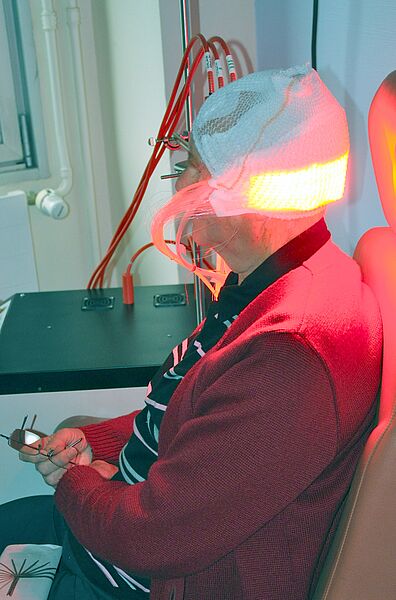
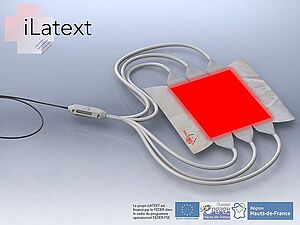
Interventional, mono-centric study on the clinical efficacy and safety of the medical device PAGETEX as a photodynamic therapy device in the treatment of Extra-mammary Paget's disease of the Vulva (EMPV)
Ongoing / closed: Ongoing
Research type (rétro/prospective): prospective
Synopsis:
Paget's disease (MMP) is a rare form of superficial skin cancer, the most common of which is the vulva (76% of cases).
The disease is observed around 70 years, rather in European-type women and is revealed by pruritus and vulvar burns of chronic evolution. The diagnosis is often too late (from a few months to several years) because the symptoms that can be related to common conditions (candidiasis, eczema) are neglected by patients or misinterpreted by doctors.
The treatment of reference is based on surgical excision but unfortunately local recurrences are very frequent (17 to 38% of cases) even if the margins of excision are healthy too. Topical chemotherapy with Imiquimod and other systemics, micro-surgery, laser treatment and photodynamic therapy (PDT) are being studied. But these treatments are mostly invasive and painful, which makes it difficult to achieve the care protocols.
The aim of our study is to see if a PDT treatment with the new PAGETEX medical device allows remission of the clinical signs of Paget's disease at 6 months with a reduction of pain during illumination sessions.
The clinical study will focus on the use of the PAGETEX medical device incorporating luminous textiles into a diffuser accessory. If the absence of pain is confirmed, patients should complete all necessary PDT sessions, with full illumination time and an optimal lesion destruction process. We hope for a clinical remission of the symptoms of the disease at 6 months and a real improvement in their quality of life, quality of sexual life, and their state of anxiety.
Principal Investigator: Pr Laurent MORTIER
Scientific coordinators: Pr. Serge MORDON (Inserm)
Study Sponsor: CHU of Lille
Primary endpoints: Define if the PAGETEX device let to obtain a disease control rate at 3 months (total + partial response) in 30% of the patients included.
Secondary endpoints:
- Evaluation of the clinical response at 6 months
- Evaluation, by an independent committee of physicians, of the clinical response of the treatment at 3 and 6 months
- Evaluation of the evolution of the quality of life of patients at 3 and 6 months
- Evaluation of the pain at each PDT session.
- Evaluation of the histological evolution of lesions at 3 and 6 months
- Evaluation of the clinical evolution of erythema at 3 and 6 months
- Evaluation of the residual fluorescence after each PDT session using the Fotofinder® Dermoscope.
- Evaluation of the satisfaction of the patient at 6 months
- Evaluation of the toxicity / tolerance of treatment
Evaluation criteria of the primary endpoint: Level of clinical response to treatment evaluated by the investigator by comparing the extent of the lesion at 3 months to the extent of the lesion at the inclusion visit. (no answer, partial answer, complete answer).
Evaluation criteria of the secondary endpoints:
- Comparison of the extent of the lesion surface to the final visit at 6 months compared to the inclusion visit
- Comparison of the extent of the lesions based on the photographs taken in natural light at inclusion at 3 and 6 months.
- Comparison of questionnaire scores (DLQI), (FSFI), (SF36) and (HADS) at inclusion, at 3 and 6 months. Scores obtained using the visual analog scale of pain during PDT sessions.
- Presence or absence of Paget cells in the control biopsy at 3 months and at 6 months.
- Comparison of erythema gradation by the investigator using a 4-point scale and erythema measurements made with the Konica Minolta CR 400 Chromameter. Analysis of the evolution of the erythema between each visit
- Correlation between the presence of fluorescence after PDT sessions and the clinical remission of the lesion area at 3 and 6 months.
- Satisfaction questionnaire completed at the final visit at 6 months.
- Collection of all adverse events (EIs and EIGs) from the beginning of PDT treatment until the last study visit
Estimated enrollment: 24 patients
Clinicaltrials.gov identifier: NCT03713203
Contact and location:
Pr Laurent MORTIER, Clinique de Dermatologie - CHU de LILLE, Rue Michel Polonovski, 59037 Lille Cedex
Phone : (+33) 3 20 44 41 93
Equipe ONCOTHAI, CRCLille INSERM U1366, bâtiment Onco Lille, Bd du Pr Jules Leclercq, 59000 Lille
Phone : (+33) 3.20.44.67.09
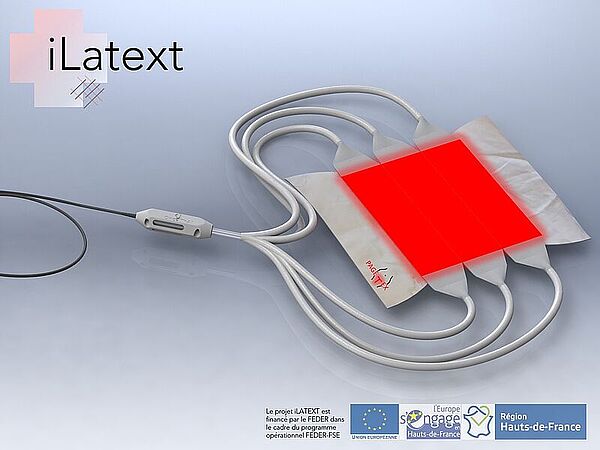
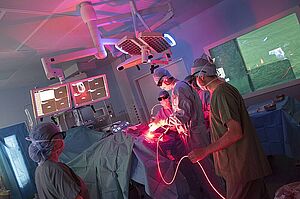
A pilot study to assess feasibility and safety of intraoperative 5-aminolevulinic acid mediated photodynamic (5-ALA PDT) therapy for the treatment of newly diagnosed glioblastoma (GBM) |
Ongoing / closed: Active (enrollment completed, patients follow-up) Research type (rétro/prospective): Prospective |
Synopsis: Glioblastoma is the most infiltrative and aggressive primitive cerebral tumour (grade IV, WHO). Despite the armamentarium, including procedures such as maximal microsurgical resection followed by concomitant radio-chemotherapy following maintenance chemotherapy, patients with glioblastoma still experience a dismal prognosis, with a median survival of 15 months. Due to the invasive growth characteristics, 85% of GBM recurrence occurs within 2.5 cm of the postsurgical cavity. Thus, it is critical to improve local control of the disease. In this context, photodynamic therapy (PDT), using 5-aminolevulinic acid (5-ALA) - or talaporfin sodium-induced fluorescence, may be effective.
|
Principal Investigator: Pr. Nicolas Reyns (Neurosurgery Dpt - University Hospital of Lille - France) |
Scientific coordinators: Dr. Maximilien Vermandel (University of Lille - France) - Pr. Serge Mordon (INSERM - France) |
Study Sponsor: University Hospital of Lille - France |
Primary endpoint: feasibility study of intraoperative photodynamic therapy early after surgical resection of glioblastoma without unacceptable and unexpected toxicities |
Secondary endpoints:
|
Evaluation criteria of the primary endpoint: Assessment of the feasibility of intraoperative PDT (after 4 hours preoperative administration of 5-ALA and maximum surgical resection of the tumor bed), with a collection of unacceptable and unexpected toxicities ≥ Grade 3 (according to NCI-CTC V4.0) reviewed by a Independent Safety Committee up to 1 month after PDT. |
Evaluation criteria of the secondary endpoints:
|
Estimated enrollment: 10 patients |
Clinicaltrials.gov identifier: NCT03048240 |
Contact and location: University Hospital of Lille, France