Research Themes
Breaking Treatment Resistance in Childhood AML
We investigate why acute myeloid leukemia in children resists current therapy and develop innovative strategies to make treatments more effective, less toxic, and more durable. By combining molecular biology, genomics, functional screening, and translational research, our goal is to improve outcomes for every child diagnosed with AML.
About the Lab
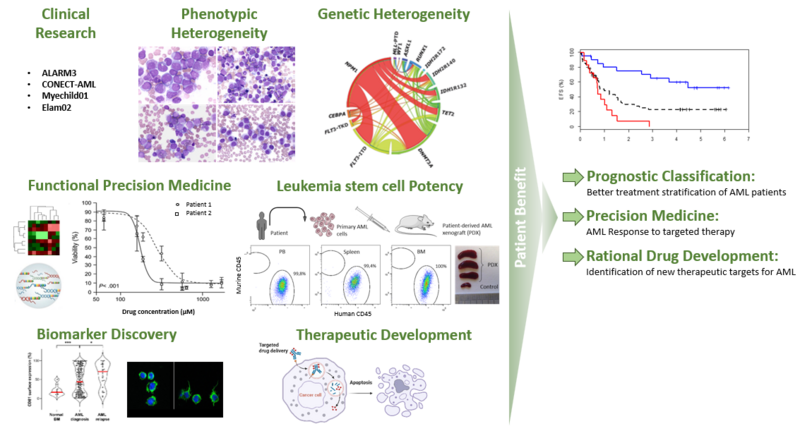
Our research brings together decades of expertise in translational pharmaco-omics to improve outcomes for children with acute myeloid leukemia (AML). By integrating functional drug testing, molecular profiling, and clinical research, we seek to understand why leukemia responds—or fails to respond—to therapy.
Working closely with pediatric hematologists and oncologists at the local, regional, and national levels, we translate laboratory discoveries into clinically relevant tools. Our team has pioneered the implementation of ex vivo drug sensitivity testing for AML, supporting treatment decisions in particularly challenging cases such as relapsed or refractory disease. We also investigate functional leukemia stem cell burden at diagnosis, an important determinant of treatment response and disease progression.
Today, our research focuses on one of the greatest challenges in pediatric AML: treatment resistance. Although new targeted therapies are becoming available, many children still experience relapse because leukemia cells evade or adapt to treatment. We aim to uncover the molecular and functional mechanisms underlying both intrinsic and acquired drug resistance across different AML subtypes.
By combining pharmaco-omics, functional precision medicine, and translational research, we aim to identify biomarkers that predict treatment response, improve residual disease monitoring, and guide the development of more effective therapies. Ultimately, our goal is to ensure that every child receives the treatment most likely to achieve a lasting cure.