EpiCARe
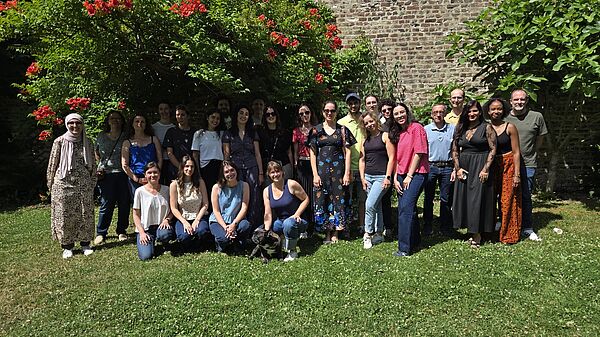
Why do some cancer cells survive treatment while others are eliminated? Why do certain tumors relapse, transform, and adapt over time? These questions lie at the heart of the research led by Dr. Audrey Vincent-Soetens, Inserm Research Scientist and Head of the EpiCARe team (Epigenetic Mechanisms in Cancer Risk and Resistance to Treatment) at the Lille Cancer Research Center (CRCL).
At the interface between fundamental biology and therapeutic innovation, the EpiCARe team explores one of the most dynamic frontiers of cancer research: epigenetics. While the DNA sequence itself remains unchanged, cancer cells can profoundly alter their behavior by switching specific genetic programs on or off. These reversible—and potentially targetable—epigenetic mechanisms play a pivotal role in tumor aggressiveness, cellular plasticity, and resistance to therapy.
Its research focuses on understanding the molecular mechanisms that drive cancer cell aggressiveness, with a particular emphasis on gastrointestinal cancers and pediatric gliomas. The objective is clear: to uncover how tumors evolve and adapt in order to develop new strategies that prevent them from escaping therapeutic intervention.
Joining the EpiCARe team also means becoming part of a laboratory committed to methodological innovation. Audrey Vincent-Soetens oversees advanced 3D cell culture and patient-derived organoid platforms, cutting-edge technologies that faithfully reproduce the complexity of human tumors and provide powerful experimental models for studying cancer biology and testing the therapies of tomorrow.
What defines her scientific approach is a combination of intellectual curiosity, scientific rigor, and a strong commitment to interdisciplinary collaboration. Within EpiCARe, researchers, clinicians, biologists, engineers, PhD candidates, and students work side by side to unravel the epigenetic mechanisms that shape the fate of cancer cells and determine their response to treatment.
Joining EpiCARe means contributing to ambitious research that addresses fundamental biological questions while pursuing a clear translational goal: making cancers more vulnerable to treatment and opening new therapeutic opportunities for patients. Because understanding how cancer cells adapt today is the key to developing the therapies of tomorrow.